Learn to snowboard: a guide for beginners
Learn to snowboard step by step: from the right stance and falling safely to braking and your first turns – with tips from our lessons at the Fallbachhang in Oberhof.
Learning to snowboard: the essentials
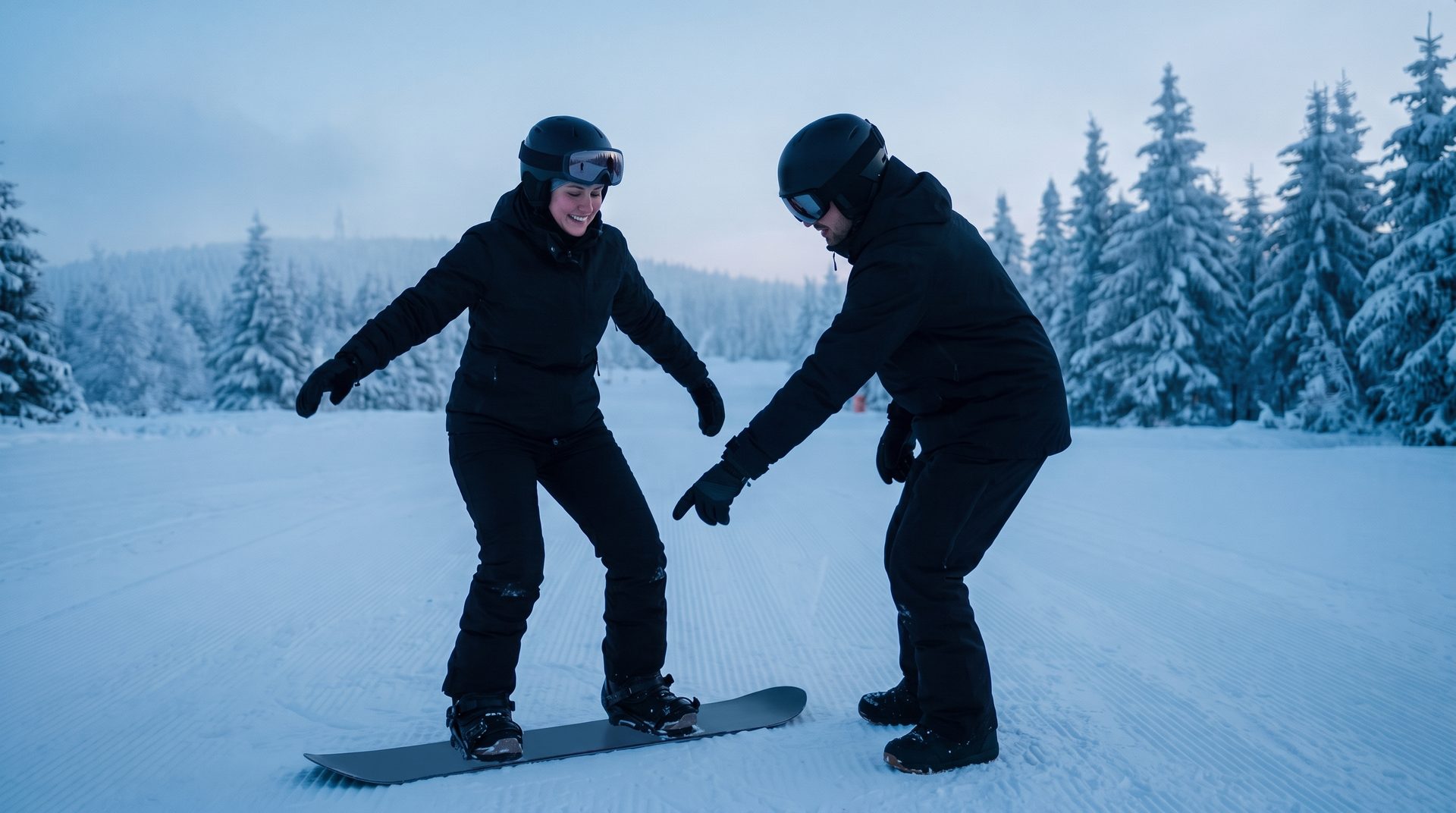
Beginners learn to snowboard fastest in a lesson on a gentle practice slope: first stance and falling safely, then getting up, braking and sliding, and finally your first turns on the toe edge and heel edge. In our Basic Course at the Fallbachhang in Oberhof, beginners usually ride controlled turns on their own and can brake by the end of the course day.
- Duration: the Basic Course is a full day of around six hours, including a lunch break of about 45 minutes. If you just want a taster, book the Beginner Course (around 2.5 hours in the morning) and extend to the full day on site.
- Age: Basic and Beginner Course from age 8, and explicitly for adults too. For children from age 3 there is the Mini Boarder course.
- Gear: you can rent board with bindings, boots and helmet with your course – see rental prices. The snowboard size calculator shows you the right board length.
- Dates: how a course day runs and when courses take place is in the course schedule.
The rest of this guide explains step by step what you practise when you learn to snowboard – from standing on the board to your first run down the slope.
The right gear for beginners
When you step onto a snowboard for the first time, having the right gear is everything. You don’t need to buy anything for your first days: rental gear is perfectly fine, and after a few days on the board you’ll know what suits you.
If you later look for your own board, an all-mountain board is the right choice for beginners. These boards are versatile and work on the piste as well as in a bit of fresh snow. The right length matters – it depends mainly on your weight. The snowboard size calculator gives you an honest range in centimetres, and the snowboard buying guide explains what to look for when you buy. You’ll also find good shops for your first own gear there, under Where to buy.
Besides the board, boots and bindings matter. Your boots should be comfortable but not loose – otherwise your heel lifts while riding. The bindings must match boot and board and give you a stable hold.
And don’t forget safety gear: a helmet is an absolute must. Add waterproof gloves, goggles and warm, waterproof clothing.
Key points
- Find the right gear to suit your ability and your height so you can snowboard safely and comfortably.
- Understand the basics of snowboarding, such as standing on the board correctly and steering with your weight, so you can get around the slopes safely.
- Learn the right technique, such as braking and turning, to get more out of snowboarding and avoid accidents.
- Practise falling safely and getting back up to avoid injuries and get back on your board quickly.
- Make your first attempts at riding on flat terrain to get a feel for snowboarding and build confidence.
Understanding the basics of snowboarding
Before you throw yourself into the adventure, it’s important to understand the basics of snowboarding. You might be wondering: “What’s the difference between regular and goofy?” It’s simple! If you ride with your left foot forward, you’re regular.
If your right foot is at the front, you’re goofy. It’s like dancing – everyone has their own style! To find out which stance suits you best, you can simply ask a friend to give you a gentle push.
The foot you put down first to catch yourself is your front foot. Sounds easy, doesn’t it? Another important point is balance.
-
Regular
Left foot forward, nose and direction of travel to the left
-
Goofy
Right foot forward, nose and direction of travel to the right
Imagine you’re a tree in the wind – you need to be flexible and able to adapt! When you’re standing on the board, you should bend your knees slightly and lean your upper body forward. That helps you keep your balance and stops you toppling over like a wet sack of potatoes.
Practise standing on the board on flat ground before you venture onto the slopes. That way you get a feel for the board and can concentrate better on the next steps.
Learning the right technique
Now it gets exciting! The right technique is crucial for riding down the slopes safely and in style. A common beginner’s mistake is tensing up and hunching the shoulders – it doesn’t just look odd, it also makes it harder to keep your balance.
Instead, try to stay relaxed and hold your arms slightly out to the side. It doesn’t just help you balance, it looks cool too! When you start riding, concentrate on keeping your knees slightly bent and looking in the direction you’re travelling.
After all, you don’t want to ride into a tree – that hurts! Another important aspect of technique is turning. To make a turn, you need to shift your weight.
For a toe-side turn, shift your weight onto the balls of your feet; for a heel-side turn, onto your heels – and turn your shoulders and gaze in the new direction. It might feel strange at first, but with a bit of practice you’ll soon notice how much fun it is! Remember: practice makes perfect!
So grab your board and get ready for some cool turns.
Practising falling safely and getting back up
Falling is part of snowboarding – it’s like learning to ride a bike: sometimes you just have to fall flat on your face! But don’t worry, there are techniques for falling more safely and getting back up. When you notice you’re falling, try to turn your body so that you land on your back or your side.
That protects your joints and prevents injuries. And hey, if you take a proper tumble and it looks funny, just throw in a few cool moves – maybe it’ll become a viral video! Getting back up can be tricky at first, but with a bit of practice you’ll be a pro!
Once you’ve fallen, roll onto your side and make sure your board is lying across the slope. Then push yourself up with your hands and pull your knee under your body. From there you can stand up – like a phoenix rising from the ashes!
It might look a bit clumsy at first, but believe me: the more you practise, the more skilful you’ll become. And when you fall again (which you probably will), take it with a sense of humour – after all, we’re here to have fun!
First attempts at riding on flat terrain
Now it’s getting serious! You’re ready for your first attempts at riding on flat terrain. Find a gentle slope or a hill without any big obstacles – that’s the perfect place for your first attempts.
Start by gently pushing yourself down the slope and concentrate on keeping your balance. It can help to ride with a friend – that way you can motivate each other and maybe even film a few funny falls! Once you feel confident, you can try making small turns.
Remember: you’re the captain of your own ship! Shift your weight from one foot to the other and enjoy the feeling of riding. Not everything will work straight away – you might fall a few times or head off in the wrong direction – but that’s all part of it!
Laugh it off and keep going; every pro had to start somewhere.
Making progress on more challenging slopes
Once you feel comfortable on flat terrain and can manage a few turns, it’s time for the next step: more challenging slopes! This is where it gets really exciting! Choose a run with a gentle gradient and make sure it isn’t too steep – we don’t want to jump in at the deep end straight away!
When you head onto the new run, take your time to practise and get used to the new terrain. Here you can refine your technique further. Try to make your turns smoother and get more control over your board.
Make sure you always keep looking in the direction you’re travelling – it doesn’t just help you ride, it also makes sure you don’t ride into a tree (we’ve already talked about that!). And if you fall again (which you probably will), take it in your stride – after all, you’re here to learn! With every attempt you’ll get better and more confident.
Tips for the right posture and balance
The right posture is crucial for your snowboarding experience! Imagine you’re a surfer on a wave – your body should be flexible and ready for any movement. Keep your knees slightly bent and your upper body leaning forward; that way you stay balanced and can react quickly.
Your arms should hang loosely at your sides or be held slightly out to the side – that helps you balance. Another important point is shifting your weight. When you make a turn or want to speed up, you need to shift your weight accordingly.
Press your front foot down and lean your upper body into the turn – that gives you more control over your board. Remember: practice makes perfect! The more time you spend on the board and the more different movements you try, the better you’ll get at handling your snowboard.
Enjoy snowboarding and keep practising
At the end of the day, snowboarding is above all about having fun! Don’t get discouraged if things don’t go to plan – everyone has their own challenges and learning curves (and I mean that quite literally!). Take your time to practise and enjoy every moment on the slopes.
Take breaks between runs and look at the scenery – sometimes it’s just nice to enjoy the moment. And don’t forget: the more time you spend on the board, the better you’ll get! So grab your friends or family and plan regular trips to the mountains.
Share your experiences with other snowboarders or ask them for tips – everyone has their own story to tell! And who knows? Maybe you’ll soon be the next snowboard pro!
So off you go to the slopes – the snow is waiting for you!
Learn to snowboard in Oberhof
If you’d rather learn your first turns with an instructor: our snowboard school in Oberhof teaches at the Fallbachhang in the Thuringian Forest, in small groups following DSLV guidelines. The Basic Course starts from zero – with stance, getting up and your first slides on a gentle slope. If you only want half a day, start with the Beginner Course; if you want to progress faster, book a private lesson. All snowboard courses at a glance.
Frequently asked questions about learning to snowboard
What is snowboarding?
Snowboarding is a winter sport in which you stand sideways on a single board and ride down the slope using gravity. You steer with the board’s edges – the toe edge and the heel edge.
What do I need to learn to snowboard?
A snowboard with bindings, snowboard boots and a helmet – you can rent all of these with your course. Add a warm, waterproof jacket and trousers, gloves and goggles.
What is the best way to learn to snowboard?
In a snowboard lesson at a snowboard school. You learn stance, falling safely, getting up, braking and your first turns in the right order, with a coach who corrects you. With us in Oberhof that is the Basic Course.
How long does it take to learn to snowboard?
Most people get the basics in one course day: by the end of our Basic Course, beginners usually ride controlled turns on their own and can brake. Becoming confident on every slope takes more days of practice – how quickly depends on balance, fitness and courage.
Can I still learn to snowboard as an adult?
Yes. Our courses are for people of every age, explicitly including adults – many people only learn to snowboard as adults.
From what age can children learn to snowboard?
The Basic and Beginner Course are from age 8. For the youngest from age 3 there is the Mini Boarder course: one playful hour, with an accompanying adult.
Where can I learn to snowboard in Thuringia?
For example with Learn2Ride at the Fallbachhang in Oberhof in the Thuringian Forest. The slope is 800 to 1,000 metres long with a chairlift and a fun park; your first steps happen on the gentle practice slope.
What safety precautions should I take?
Always wear a helmet and follow the slope rules so you don’t endanger yourself or others. Wrist and back protectors make sense for beginners, because you fall more often at the start.
You might also like
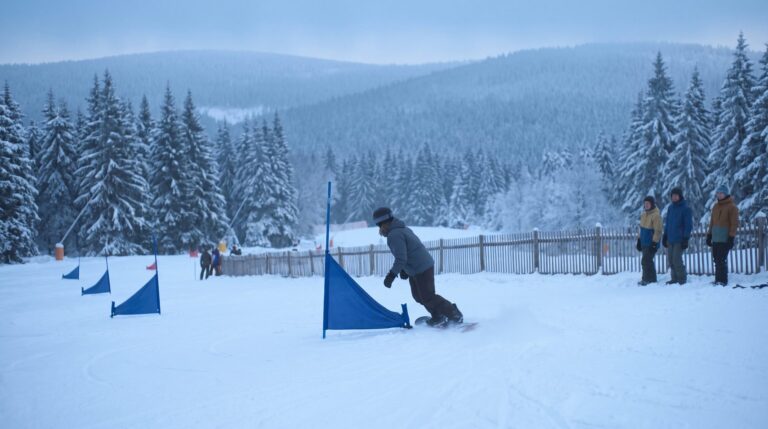
Snowboard competitions: beginner-friendly events
Snowboard competitions are like the Olympics for everyone who loves the feeling of freedom and adrenaline on the slopes. Imagine standing on your board, surrounded by …
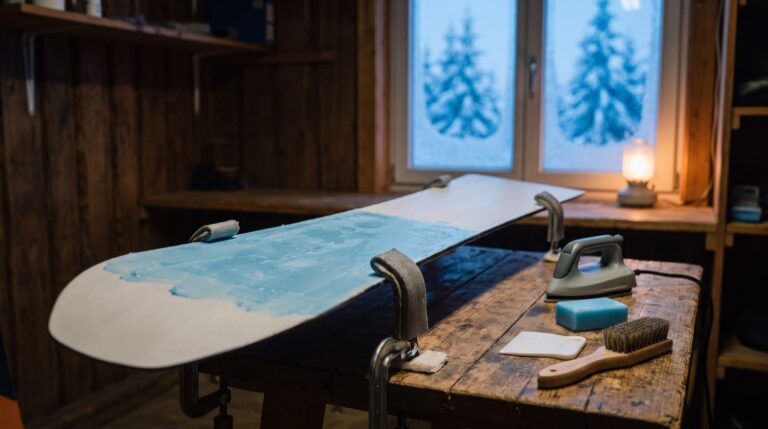
How to look after your snowboard gear properly
When you put your snowboard back in the garage after an epic day on the slopes, it’s easy to just leave it there and assume it’ll …
The best snowboard brands for beginners
Choosing the right snowboard brand is like deciding whether to take your coffee with or without milk – it can make a huge difference! When you’re …